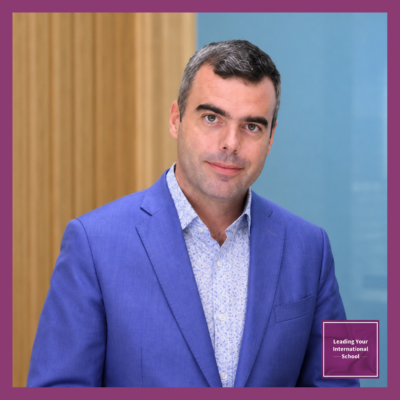
by David William Sheehan
There is no blank slate in an Irish household. You inherit rooms before you inherit opinions.
On my mother’s side, every house had the same object on the wall: my great-great-uncle’s Irish language certificate from 1905, issued by Coláiste na Mumhan before the Irish state existed. No one pointed at it. No speeches were made. It hung above kettles, family rows, and ordinary afternoons, saying what it had to say without help.
Legitimacy is earned. The real work usually begins unseen. Recognition often arrives after the effort that merited it. I did not choose that outlook. I inherited it.
Coláiste na Mumhan did not wait for permission. It built courses, standards, examinations, and discipline at a time when Irish had no recognised place in formal education. The institution came before the state. The work came before the reward.
That logic settled into me early. When something mattered, you worked harder, organised better, kept building. Useful instincts, most of the time. But they also made it easy to confuse effort with change, and activity with progress.
Single Loop: Fix the Action
Years later, far from that wall, the weakness in that mindset became clear. It happened in a textile factory outside Bangkok. Government-funded English training. Forty hours, tracked attendance, and certificates at the end. On paper, a development pathway. In the room, arms folded before the first sentence. Eyes polite but absent. The kind of silence that has already left.
My instinct was immediate. Work harder inside the frame. Slow down. Simplify. Repeat. Smile more. Break the task into smaller pieces. Fifteen minutes passed. Nothing moved. Not because the teaching was poor. Because the structure meant nothing to them.
So I did what I had been trained to do. I pushed harder. Changed activities. Repeated instructions. Increased energy. Tried encouragement. Tried pressure. Everything except questioning the frame itself.
They completed the hours. Attendance was tracked. Certificates were issued. On paper, the programme functioned. In the room, very little had changed.
Argyris and Schön called this single-loop learning: correcting the error without examining the conditions that produced it. It keeps the machine running. It can also keep the machine running in the wrong direction, with everyone busy and no one naming what is happening.
And that is the deeper risk: systems can become highly effective at correcting themselves without ever questioning whether they are aiming at the right thing in the first place.
Double Loop: Question the Assumption
In schools, the pattern shows up most clearly in the structure itself.
Walk into any educational institution and you see it immediately: policies everywhere. They accumulate over time, each one written for clarity, each one adding another layer between intention and practice. Behaviour. Uniform. Attendance. Homework. Devices. Appraisal. Safeguarding. And then, in a folder that almost no one opens: a policy for the policies.
I remember one leadership meeting about declining engagement in a year group. The room moved quickly into familiar responses. Tighter consistency. Reinforce expectations. Hold the line. It made sense in the moment.
The assumption underneath was simple: fix behaviour and engagement will follow. Then one colleague said quietly: I don’t think it starts at behaviour. I think they are disengaging long before behaviour appears. We heard it, then carried on.
That is usually how systems stay intact. The actions shift. The assumptions don’t.
The shift came later during a MAP data review. Growth scores on the screen. My first instinct was already set: identify students, group interventions, assign follow-up. I had my laptop open before the conversation had really started.
Then a senior teacher asked: before we decide what to do, what is this actually telling us about learning? Someone replied that it showed who was underperforming against expectation. It fitted. But only if you accept the premise behind it: that a MAP score is the same thing as learning. We weren’t looking at learning. We were looking at what the test could capture.
I said: I’m not sure we can call it underperformance if we’re only seeing part of the picture.
That changed the direction of the room.
Over the following weeks, the conversation stayed open longer. What we found wasn’t a data problem. It was a design problem. The system had been built around what it can measure easily: structured responses, familiar formats, speed under pressure.
Some students learned to perform inside that. Others, whose learning didn’t show up in those signals, slipped through it. The better the system worked, the less it showed us of what was actually happening. One teacher said later, standing by the photocopier: for the first time, I feel like I’m teaching them, not the spreadsheet.
Not everyone was comfortable with that. Rankings feel clear. Numbers feel safe. But once you start questioning what the system is built on, that clarity stops holding in the same way.
Argyris and Schön called this double-loop learning. Not changing what you do inside a system, but noticing the assumptions that made the system feel natural in the first place. Once you see them, they don’t sit quietly anymore.
Triple Loop: Change What You Are
Both the Bangkok factory and the MAP review were places caught inside their own assumptions. What neither had really asked was what kind of place they were becoming through the choices they kept repeating.
In 1926, four brothers, Venkataswamy, Rangaswamy, Ganga, and Narayanaswamy Naidu, divided their ancestral property into five parts and set one share aside for a public trust. The trust was declared the fifth brother.
The decision did not come from abstract philanthropy. It came from experience. A member of the Naidu family had been refused admission to a British-run school in Coimbatore. They could have found another school and moved on. Instead, they recognised the larger problem: good education was controlled by institutions that did not serve everyone. So they asked a different question. If the right school did not exist, why not build it?
The result was PSG Sarvajana School. Sarvajana means “for all people.” The name made the position clear. Education would not be organised around privilege or narrow class. It would be treated as a civic good, something a community builds for itself. What began as exclusion became institution-building.
From that starting point, PSG did not remain a single school. It grew into an ecosystem of technical institutes, colleges, hospitals, research centres, management education, healthcare infrastructure, and industry-linked training. One refusal, carried forward across a century, became one of India’s most significant charitable educational trusts.
PSG World School is the thirty-third institution in that lineage, developed with an investment of roughly fifty million dollars. From a cold rejection a century ago, PSG has grown into a charitable trust valued at around two billion dollars. The scale has changed. The original impulse has not.
PSG was never only about opening campuses. It was about changing what was possible in a community. Schools that last do more than educate individuals. They widen what people around them can imagine doing next.
Bateson described three depths of change. First, you alter actions. You fix errors and improve performance. Second, you question the beliefs guiding those actions. Third, you change the frame that made those beliefs seem normal in the first place. At that level, identity changes.
The Naidu brothers did not ask how to succeed inside a system that had already decided who belonged. They asked what kind of system should exist instead, and for whom. Then they built it. That is triple-loop learning: not refining the old model, but creating a new one from a different set of values.
The brothers’ question in 1926 was about access. That question still matters. But a hundred years of institution-building earns a harder one. What kind of learners are our systems quietly producing? What do our structures reward each day: curiosity, courage, depth of thought, or the polished performance of competence?
Mission statements matter less than timetables. Schools reveal themselves in calendars, corridors, assessments, and in how adults speak to one another when students are not watching.
Most institutions spend their energy in the first loop. Some step into the second. The rarest learn to live, even briefly, in the third, where the question is no longer efficiency but identity.
In 1926, they answered that question by building. We are asked to answer it again.
What the Certificate Taught
That old certificate still stays with me. Not sentimentally, but structurally. It carries a simple logic: seriousness often comes before permission, and meaningful work usually begins before legitimacy is granted.
The loops are not a ladder. There are days when pressure pulls you back into whatever is most immediate: a timetable to fix, a parent email waiting, a behaviour issue that cannot be left until later. The first loop is not the enemy. It is what keeps a school functioning while harder questions remain open.
But it cannot be the only way of thinking.
The task is to notice which loop is shaping your response while you are inside it, before it becomes automatic and starts deciding for you.
Most systems do not fail loudly. They shape people quietly.
What about you?
What pattern in your organisation keeps returning in new language, repackaged each year as if it were new?
What problem do you keep managing at the surface because asking deeper questions would unsettle too much?
What would change if you stopped asking how to improve the system and asked instead what the system is teaching everyone inside it to become?
And when people leave your organisation, what habits of mind, what sense of self, what quiet assumptions do they carry with them?
David William Sheehan, Principal, PSG World School India
LYIS is proud to partner with Beyond Classrooms