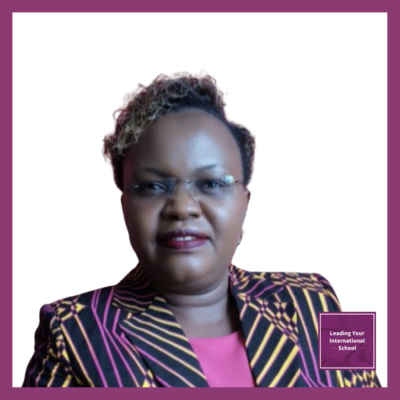
by Mary Mwangi
“Before joining Seed of Hope, I felt like I had to choose between caring for my child and building a future for us. I never imagined I could do both.”
— Francesca, Seed of Hope graduate, young mother and entrepreneur, Kitui County
Francesca’s words capture a reality shared by millions of women across Africa and around the world. For women and girls, the barriers to education, skills development and economic opportunity rarely begin in the classroom. They begin long before enrolment, shaped by unequal care responsibilities, financial hardship and social norms that often require women to place their aspirations behind the needs of others. According to the International Labour Organisation (ILO), women perform more than three-quarters of the world’s unpaid care work, leaving them with significantly less time for education, paid employment and entrepreneurship. These structural inequalities continue to limit women’s participation in the labour market and constrain their economic independence.
For young mothers, these barriers are often even greater. Access to training is only one part of the equation. The ability to attend consistently, complete a course and transition into decent work is often determined by whether programmes recognise the realities women navigate every day.
At Seed of Hope, nearly 70 per cent of learners are girls and young women. Many are young mothers balancing the demands of caregiving with the desire to build independent futures. Their experiences have challenged us to rethink what meaningful access to skills development really looks like.
In the spirit of this year’s theme, Raising Women’s Voices, we believe these lessons are best understood by listening directly to the women and girls whose experiences have shaped them. Their voices speak not only to what Seed of Hope means to them, but also to the lessons they have taught Seed of Hope.
“I wanted to learn a skill, but every day I worried about who would look after my child while I was in class. I felt like becoming a mother meant I had to put my future on hold.”
— Francesca, Seed of Hope graduate and entrepreneur
For Francesca, the greatest barrier was never a lack of motivation or willingness; childcare was the invisible barrier that kept her from taking the opportunity to change her life. Her story illustrates a challenge that extends far beyond one individual. Women and girls frequently face barriers that lie outside the education system itself, yet these barriers often determine who enrolls, who completes training and who ultimately benefits from economic opportunities.
Recognising and responding to these realities is fundamental to gender-responsive programme design. In response to experiences shared by women like Francesca, Seed of Hope introduced childcare vouchers for young mothers and provides menstrual hygiene products to every female learner. These are simple, practical interventions, but they address barriers and unlock opportunities.
Over the past three years, Seed of Hope has supported more than 459 young mothers with monthly childcare vouchers, helping them remain in training while their children are cared for. Behind every voucher is a woman who was able to continue building her future in dignity.
For Francesca, the childcare voucher provided more than peace of mind. It enabled her to participate fully in her training, knowing her child was safe. By saving some of the cash voucher support, she was able to invest in a salon and beauty business after graduating. Today, she runs her own small enterprise, stocks beauty products and earns an income that supports both herself and her child.
“The childcare voucher gave me peace of mind. I could focus on learning because I knew my child was safe. I saved what I could and used it to start my salon. Today, I earn my own income and provide for my family. Seed of Hope helped me realise that motherhood did not mean the end of my dreams.”
— Francesca, Seed of Hope graduate and entrepreneur
The most important lesson from Francesca’s story is far more than the childcare voucher. It is that women’s lived experiences are not simply stories to be heard. They are knowledge that should shape the design of programmes, policies and investments. When women help define the solutions, those solutions are more responsive, more inclusive and more likely to create lasting change.
At Seed of Hope, we design our programmes by listening first, ensuring our responses reflect the realities of the people we serve.
About Seed of Hope
Seed of Hope is Raising Futures Kenya’s flagship youth skills development programme, providing accredited vocational training and wraparound support to vulnerable young people, 65–70 per cent of whom are girls and young women. By combining market-relevant skills with practical support such as childcare vouchers, menstrual health support, counselling, and mentorship, Seed of Hope helps young people overcome barriers to learning, complete their training, and transition into sustainable livelihoods.
To learn more about Seed of Hope and our work, visit our website: https://seedofhopekenya.org/
LinkedIn: Seed of Hope – Kenya
Facebook: SeedofHopeKenya
Mary Mwangi, Executive Director, Raising Futures Kenya
LYIS raises funds at its Gala Dinner, held during its annual leadership conference, to support RFK and its mission. In the last 2 years, LYIS and its supporters have raised over $2500 and #LYIS27’s target is $2000.