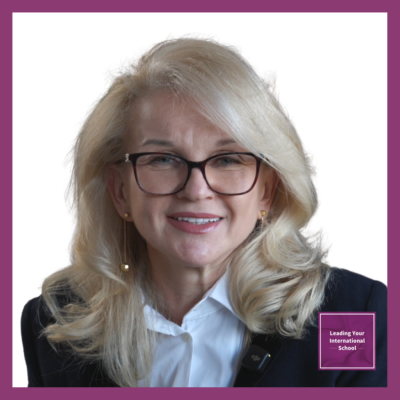
by Olga Zastavna
Four and a half years ago, at the start of the Russia-Ukraine War, we made a pledge to Ukraine and a promise to our families: no matter what comes, their children will learn, and our schools in Kyiv and Dnipro will stay open.
Keeping that promise has meant many things over the years – reworking timetables around air alarms, teaching through blackouts, moving lessons underground when we have had to. But underneath all of it sits a much simpler truth: none of it is possible without teachers who are willing to stay.
Across the international schools sector, the competition for talent has never been sharper. Good teachers are being courted with higher salaries, softer climates, greater comfort, and none of the complications we in Ukraine live with every day. By any conventional measure, a British international school operating in a country at war should struggle to compete for that talent at all.
And yet we do. Not despite the war, but, in some ways, because of what it has taught us about the true essence of our job.
We stopped, some time ago, trying to recruit teachers in the way other schools recruit teachers. We are not offering an easy posting, and we have never pretended otherwise. What we offer instead is something harder to find and, we have come to believe, more valuable: a role with genuine weight to it.
The Ukrainian and international educators who join us are not simply filling a vacancy. They are choosing a vocation. They come because they want their work to matter in a way it might not elsewhere; because they understand that the children in our classrooms will remember who stayed; and because they are ready to leave a lasting impact on the lives of the next generation Ukraine will need when the war is over and rebuilding begins.
They go beyond the curriculum. They anchor children in something steady and true. They build resilience, not as a subject on a timetable, but as something a child absorbs simply by watching an adult keep showing up.
𝐀𝐢𝐫 𝐑𝐚𝐢𝐝𝐬 ≠ 𝐏𝐚𝐮𝐬𝐞 𝐢𝐧 𝐄𝐝𝐮𝐜𝐚𝐭𝐢𝐨𝐧
The conflict is part of its daily texture, rather than background noise to school life here. When air alarms go off, we move calmly downstairs to our shelters – two full levels beneath the school, floor -1 (yellow) and floor -2 (red) – and continue teaching there.
What began, out of pure necessity, as a secure space has grown into something considerably more: a genuine learning environment, zoned by age group and fully equipped with desks, laptops, touch screens, water, snacks and even cots for our youngest learners. The school day simply continues – uninterrupted, exactly as it should be.
It is a very different atmosphere from an ordinary classroom. And so, in its own way, it becomes a lesson in itself: a demonstration to every child that learning does not stop, that adults are still planning for tomorrow, and that there is a real and shared sense here that keeping school life going matters in its own right.
Safety at BISU, in the end, means something quite simple: the freedom to learn, to connect, to create, to laugh – and simply to be children.
𝐀 𝐖𝐢𝐧𝐭𝐞𝐫 𝐖𝐨𝐫𝐭𝐡 𝐑𝐞𝐦𝐞𝐦𝐛𝐞𝐫𝐢𝐧𝐠
We are consistently amazed by the strength, dignity and resilience our teachers, international and local, show in the face of all this.
Here is one example: a UK-born educator who joined BISU two years ago. This winter, likely the hardest since the war began, tested everyone – and him especially. After a strike on a nearby thermal power station, his apartment lost heating entirely, with outdoor temperatures dropping to around minus twenty.
Of course, we found a solution. We arranged an alternative apartment fitted with a generator and its own autonomous electricity supply, giving him somewhere reliable to return to at the end of each day. He also leaned on the school through those weeks – charging his power banks at work and drawing on the goodwill of the colleagues around him.
That story stays with us because it shows the extraordinary commitment of those who truly choose to stay with us at this pivotal moment in Ukraine’s and the world’s history.
It is also a reminder that the support we offer our international staff cannot end at the school gate. A teacher who cannot charge a phone, heat a room or sleep through the night is not a teacher who can walk into a classroom the next morning and be fully present for a child who needs them.
Looking after our people through winters like that one is not a peripheral part of our responsibility to them. It is central to it.
𝐖𝐡𝐚𝐭 𝐖𝐞 𝐀𝐬𝐤, 𝐚𝐧𝐝 𝐖𝐡𝐚𝐭 𝐖𝐞 𝐎𝐟𝐟𝐞𝐫 𝐢𝐧 𝐑𝐞𝐭𝐮𝐫𝐧
That distinction changes everything about how we recruit and how we support the people who say yes.
We are honest from the first conversation about what life here involves – the sirens, the winters, the adjustments that become second nature far faster than anyone expects. But honesty is only half the job. The other half is making sure that once someone commits to us, we do not leave them to manage the rest alone.
Every international teacher who joins BISU is supported from the moment they say yes. We cover the practicalities of relocation, including accommodation, and we walk alongside them through every stage of settling in – from the logistics of travelling into Ukraine to the day-to-day guidance that helps a new arrival feel less like a visitor and more like a colleague.
We have learned, over four years, precisely where the friction points are for someone starting a new life here, and we have built our support around removing as many of them as we can.
𝐁𝐮𝐢𝐥𝐝𝐢𝐧𝐠 𝐟𝐨𝐫 𝐭𝐡𝐞 𝐍𝐞𝐱𝐭 𝐘𝐞𝐚𝐫
This winter was the hardest one yet, and it sharpened something we already knew: resilience is not a personal trait we hope our staff arrive with. It is infrastructure, and it is our responsibility to build it.
Our generators kept classrooms lit and warm through blackouts that would otherwise have closed our doors. They became, in a very literal sense, part of what makes it possible for our promise – that every child in our care will keep learning – to hold.
But we are not treating this winter as the last test we will face. As we prepared for the new academic year, we looked seriously at what comes after generators – at alternative sources of electricity and alternative heating systems that could carry us through.
This is not contingency planning for its own sake. It is what taking our staff and our students seriously looks like in practice.
𝐎𝐮𝐫 𝐆𝐫𝐞𝐚𝐭𝐞𝐬𝐭 𝐂𝐮𝐫𝐫𝐢𝐜𝐮𝐥𝐮𝐦
We say this often, and we mean it every time: our team is our greatest curriculum.
The Ukrainian and international educators who choose BISU are showing our students, by example, what it looks like to commit to something difficult because it is worth doing. That is not a message we could teach from a textbook. It is only ever taught by people willing to live it.
So when we talk about retention, we are talking about something more specific than staffing numbers. We are talking about the people who have looked honestly at what this role asks of them and decided that the children in Ukraine are worth it.
We intend to keep finding those people, and we intend to keep giving them every reason to stay.
𝐀𝐧 𝐄𝐫𝐚 𝐨𝐟 𝐒𝐤𝐢𝐥𝐥𝐬
These war-stricken years have brought home to us that we are living through an era of skills.
Our students and our teachers have taught each other – and modelled for each other – the qualities that matter most when circumstances refuse to be ordinary: resilience, determination, mutual support and trust, collaboration, empathy, the instinct to look for a solution rather than dwell on a problem, and an adaptability that would have seemed almost unimaginable five years ago.
Nobody here has had the luxury of learning these things as theory. We have learned them from one another, in real time, in classrooms and in shelters alike – and in the process, we have become something stronger than any one of us could have become alone.
𝐀 𝐕𝐚𝐥𝐮𝐞 𝐓𝐡𝐚𝐭 𝐂𝐚𝐦𝐞 𝐅𝐢𝐫𝐬𝐭
Over these same four and a half years, we have developed – and lived, day by day – a value that now sits at the very foundation of everything we do at BISU: genuine, unguarded care for our children.
It is not a slogan. It is the ground everything else stands on, because without real care, no curriculum, however excellent, can help a child truly thrive.
Across the international schools world, care for student wellbeing has only recently become a serious strategic conversation. At BISU, we never had the luxury of arriving at it late or by trend. We have been building and practising this value out of necessity and conviction since the first days of the war, four and a half years ago.
𝐋𝐢𝐟𝐞 𝐆𝐨𝐞𝐬 𝐎𝐧
What else keeps our teachers in Kyiv and Dnipro?
As our UK-born teacher puts it, life here is busy. People go to work, meet friends, go to restaurants and take their children to school, trying to live as fully as possible. Our international staff find friends here and have plenty to fill their time.
They go to the gym, the theatre and concerts, eat out now and then at some genuinely excellent restaurants, and sometimes travel to other cities to discover Ukrainian culture.
Life is invincible.
𝐖𝐡𝐚𝐭 𝐊𝐞𝐞𝐩𝐬 𝐚 𝐋𝐞𝐚𝐝𝐞𝐫 𝐆𝐨𝐢𝐧𝐠
On a personal note, leadership means guiding, motivating and holding steady for your team – day after day. But leaders need to recharge, too.
For me, that has been Pilates.
I have come to believe that our bodies are among the most honest resources we have. They tell us what we need, if we are willing to listen. Pilates gives me the calm and energy to keep showing up – for the school, for my team and for the people who have chosen to stay with BISU.
𝐍𝐞𝐰 𝐒𝐜𝐡𝐨𝐨𝐥 𝐘𝐞𝐚𝐫 𝟐𝟎𝟐𝟔–𝟐𝟎𝟐𝟕
BISU is a school serving children and families during an incredibly difficult time – not just another international teaching post.
We were the first Cambridge school in Ukraine to introduce British education, back in 1997. For almost three decades, we have maintained the best of the British education ethos and values, now combined with the Ukrainian, indomitable spirit.
Our graduates continue to build their careers proudly, in Ukraine and around the world. We are determined to continue this legacy and remain committed to this mission.
I am also very proud and honoured to share that both our Kyiv and Dnipro schools reopened their doors on 1 September, welcoming our returning and new families for the 2026–2027 academic year – despite the severe challenges we continue to face.
We have a great team of international teachers and leaders, both returning and new, who are determined to make a difference, support our students and families, and ensure that a high-quality British education continues to thrive in Ukraine.
BISU is the only international school that has been physically operating throughout the war and remains open to welcoming global educators who want to be part of this mission.
To anyone considering it: this is not an easy role, and we will never pretend otherwise. But for those who see high standards of education as a form of defiance against aggression – as proof that a nation under attack will not lower its expectations for its children – there is no more meaningful place to teach.
It is highly challenging. It is also, in equal measure, highly rewarding.
Olga Zastavna, Founder & Board Chair, The British International School, Ukraine
—–
LYIS is proud to partner with Beyond Classrooms