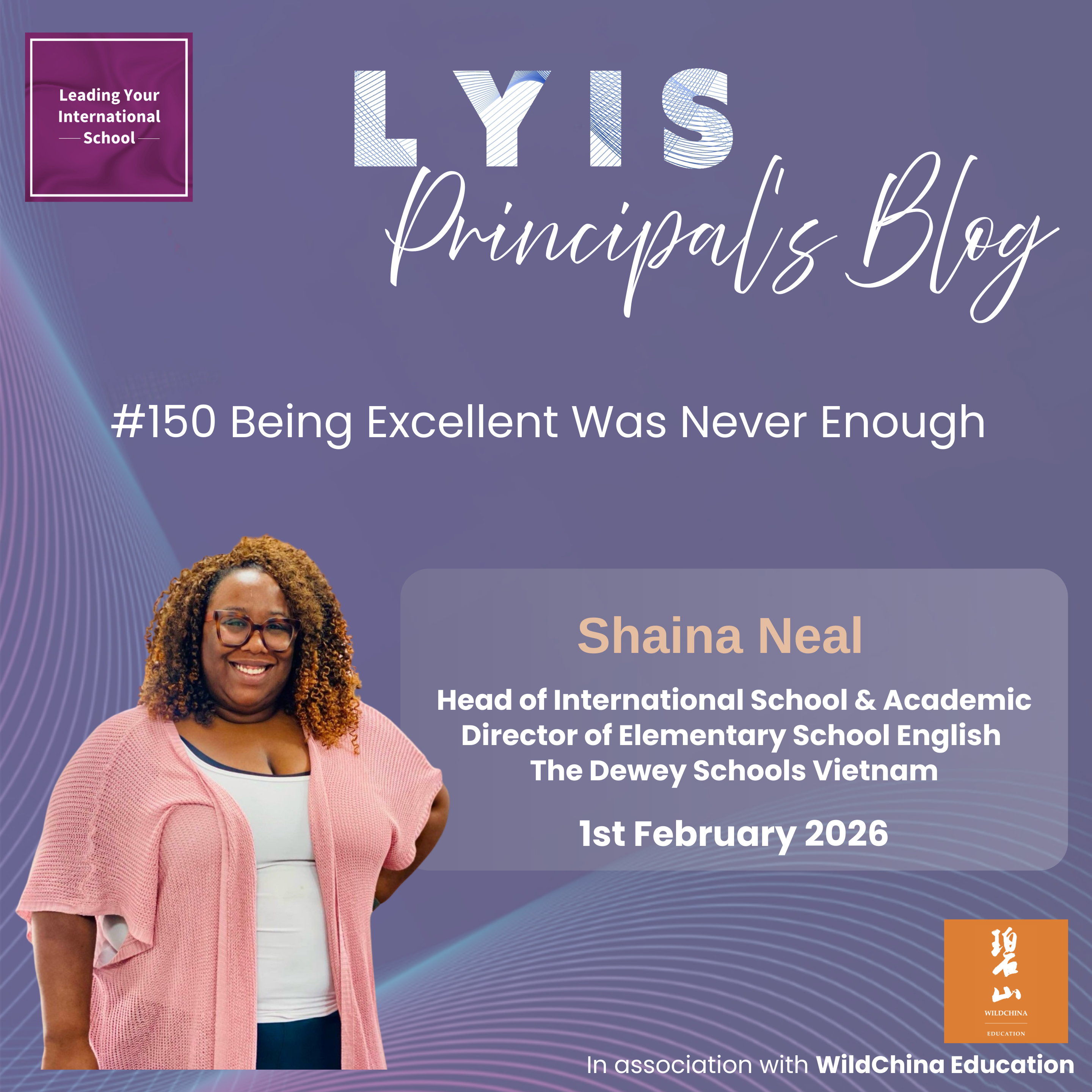
by Shaina Neal
On Imposter Syndrome and learning the hustle
My second year as a school leader, I sat in a room with principals, organizational leaders, and heads of institutions, many of whom had not experienced the same challenges or achieved the same successes I had, yet I still felt small. That dissonance is not easy to reconcile
But there it was again…that nagging feeling of being less than. Of being not quite…
Have you ever felt extraordinarily …less than? It’s ok to be honest. Even with all those degrees and years of people singing your praises. I’m talking about the people who were “going places.” The ones everyone pointed to and said, She’s going to be something.
Once upon a time, you were top of the class. A jet setter. The most promising. Probably even the teacher’s pet. And now, even after all the hard work and accolades, you still walk into certain rooms feeling like you need to prove you belong there.
Because the truth is, adulthood doesn’t always deliver the story you wrote for yourself at seventeen. And for many BIPOC folks, that disconnect comes with an extra layer. When you grow up without the same exposure, access, or examples of what certain kinds of success can look like, you often end up walking into spaces that feel unfamiliar even when you’ve earned your seat. The applause quiets down, the path gets less shiny, and suddenly you’re not the “next big thing”…you’re the only one in the room who feels like they have to keep proving they belong there.
It’s not just regular adulthood anxiety, it’s the weight of being first, of being different, of carrying the pressure of representation without ever being taught the rules of the game. That lack of proximity to power, to mentorship, to “people like you” in those spaces can make confidence feel fragile, even when your résumé says otherwise.
The First Generation Lie
As a Black woman from a low socioeconomic background and a first-generation college student, I was sold a very clean story.
Get the degree. That’s the ticket.
What no one told us is that the degree gets you into the room, but it does not teach you how the room works. We were surrounded by starry-eyed dreamers and we believed the world was ours. The unrealistic faith I had in myself at that time was daunting! I remember walking into my college major fair (where the departments have booths for interested freshmen) and the head of the philosophy department asking me what I wanted to do with my life, and I responded, with my full chest, “I want to take over the world.”
Insert gag. Cringe. Immediate regret.
Worse… I didn’t answer the question. Why didn’t someone help me answer that question?
No one stopped me and said, “Okay… but how?”
No one explained what majoring actually meant.
No one explained careers, networks, or power.
I had the tools, the intelligence, the drive, but there were gaps. And as an adult, those gaps grew into imposter syndrome. According to Chris Emdin, author of “For White Folks Who Teach in the Hood”, Imposter syndrome is what happens when people from historically marginalized communities are placed into spaces that were never designed for them and then made to feel like the discomfort they experience is a personal failure instead of a structural one. Those marginalized people learn, often quietly, to see their differences from White culture as something to correct rather than something to honor.
Emdin pushes back on the idea that imposter syndrome means “you don’t belong” or “you’re not good enough.” Instead, he argues that what gets labeled as imposter syndrome is really a mismatch between identity and institutional norms, especially for BIPOC professionals.
There is a point for many marginalized people when they realize that working twice as hard got them in the door, but it wouldn’t keep them at the table.
Imposter Syndrome Is a Knowledge Gap, Not a Character Flaw
For a long time, I thought feeling inadequate meant I wasn’t good enough. That voice in the back of my head saying, “Girl, you don’t know what you’re doing.” I now understand it often means I was underexposed. I didn’t lack intelligence or work ethic. I lacked mentorship. I lacked access. I lacked someone to explain the unspoken rules. Being excellent and passionate wasn’t enough. And when you don’t know the rules, you internalize the struggle.
A question I ask people is this: Is what we call inadequacy actually a lack of exposure? Not only your exposure to the work itself, but the system’s exposure to people like you in these roles?
Its not always loud. Not always intentional. But costly. A company’s lack of diversity could lead to feedback getting dismissed as overreacting or cultural knowledge getting treated like opinion. And people who could make the system better are left feeling like they’re speaking a language no one wants to learn. Left feeling like Imposters.
How do you beat the Imposter
Learn the Rules
Here’s the part that doesn’t get said enough.
Being excellent does not guarantee advancement.
Being dedicated does not guarantee recognition.
Being humble does not guarantee opportunity.
Especially if you are a woman.
Especially if you are a person of color.
Part of imposter syndrome is thinking that what you bring to the table is not enough or that what’s different about you is a deficit.
I was raised to believe that if I worked hard, someone would notice. Sometimes they did. Often, they didn’t. What I learned, slowly and painfully, is that excellence opens doors, visibility decides who gets invited through them, and the power you wield keeps you at the table.
Power.
Power can feel like a dirty word for people who don’t covet it. But power, in this context, is not ego or dominance. It is access, influence, and the ability to translate excellence into opportunity for yourself and others like you.
A truth I had to discover was that excellence and power are not the same thing and often, not even in the same conversation. No matter what your political acumen, we can all agree that Donald Trump is and has been very powerful, even before he was the president. We can also agree that he is not the sharpest pencil in the case. The most powerful man in the world, and no one would call him excellent at all. Think about that. Check the end of the blog for my top 3 books that teach you how to navigate the world and own your imposter.
Toot Your Horn And Take Your Credit
By my fifth year teaching math, I had refined my craft. My lessons were engaging, centered student voice, and produced strong outcomes. My principal often brought visitors to my classroom as an example of effective instruction. But while my practice was celebrated, by differences were not. Those differences led my principal to call me “unpolished” to a hiring committee when I was applying for a position.
Let’s be clear that “unpolished” in this context specifically meant “too Black” in a small Southern Town when I was a proud Northerner. Too loud, too direct, too…me. I didn’t get the position.
In a twist of fate, the teacher that was hired ended up coming to me for help. Wanting to support the team, I helped her by gifting her my detailed, engaging notes and materials. Three months later, at a PD session, my principal praised the new STEM teacher and highlighted her exemplary planning, using my materials as evidence.
The way the New Yorker almost came out of me. Unpolished would have been a compliment. But I held my tongue.
But I knew then that it would never happen to me again.
I spent that year emailing everyone when I was doing killer lessons, the Instructional coaches, assistant principals, other teachers, and even the principal. Come see this Queen of education in action. I started tooting my own horn. Shouting myself out. Calling attention to how I was a leader and a trailblazer.
When I applied for another position the following year, there was no way being “unpolished” (AKA Black and unapologetic about it) was keeping me from getting it.
Many of us were taught that self-advocacy is arrogance. That talking about your accomplishments is bragging. That professionalism means silence.
But humility without visibility often becomes invisibility.
Tooting your own horn is not ego. It is clarity. Its receipts. It is making your impact legible in systems that reward confidence over quiet competence.
Mentor
Mentors teach you how to translate your work into opportunity. They tell you when something is out of line or when you’re overeating. Shout out to my email readers, my “you might not want to say it like that” people, my “let’s figure out what you need to do to fix this” people.
The loss of the STEM job also saw a loss in my confidence. Unpolished? I got a full scholarship to college. I was top of my class. I got accepted into Teach For America when only 20% of applicants did. I’d taught in several countries and states. And I was a damn good teacher. Yet I wondered if I was enough, then I wondered if I was too much. The imposter syndrome was in full effect and I felt like who I was was wrong.
That feeling led me to be more transparent. I spoke to the coworkers and mentors I trusted. The retired principal who taught social studies that year, my instructional coaches, professors from college, my cousin who was a career criminal – don’t judge. Mentorship doesn’t always wear a suit. He knew systems, power, and consequences better than most. I asked him about work, my personality, my future and the advice I received was
“Listen…you’re not too much. You’re just in rooms that don’t know what to do with you yet. Every job legal or illegal is a hustle. And that’s what you need to learn”.
And through all the navigating and digging, I realized something else: mentorship isn’t just about correction, it’s about celebration. You need people in your corner who can help you tell the difference between what needs refining and what simply needs owning. You need someone to teach you the hustle.
Hustle is the disciplined pursuit of your purpose, even when no one is applauding, no one is watching, and the work is still unfinished.
Because the truth is, some of the very things that made me feel like an imposter were also the things that made me me. If I’m loud, I own it. I love that I never need a microphone, that my joy can fill an entire building, that my laugh turns a hallway into a celebration. If I’m direct, I own that too, because you will never walk away from me wondering what I meant or where I stand.
For a while, I thought those parts of me were “too much.” But mentors helped me see they weren’t flaws to erase, they were strengths to channel. They reminded me that success doesn’t require shrinking, it requires alignment. There were a few things I could afford to polish, yes, not my personality, but the way I approached work and professional interactions. Mentorship gave me both the mirror and the megaphone: the honesty to grow and the permission to stay whole while doing it.
The Work Moving Forward
To my fellow educators, especially those who are first-gen, Black, Brown, women, or all of the above, I leave you with this:
You are not behind.
You are not ordinary.
You were just never given the full map.
The more exposure BIPOC have, the more they learn how to hustle. The more they learn how to hustle through exposure and mentorship, the more confident they are in who they are what they they bring to the the table. That confidence at the table makes them invaluable and powerful.
Find mentors. Be visible. Speak your name with pride. Teach others what you had to learn the hard way. It’s ok. Because being excellent was never the finish line. It was just the beginning.
The hustle doesn’t stop.
Cue Rick Ross
And for your listening pleasure, here is the Anti Imposter Syndrome Playlist I listened to while attempting to write this 100 times.
- Till I collapse- Eminem
- Pink Pony Club- Chappell Roan
- Stronger – The old Kanye West (not this new guy)
- Golden- KPop Demon Hunters
- Hustlin’ – Rick Ross
- Money – Cardi B
- Flawless – Beyoncé (or any Beyoncé)
- She got her own- Ne-Yo and Jamie Foxx
- Just Fine- Ma J Blidge
- 7 Rings- Ariana Grand
- Miss Independent – Ne – Yo
Books that should be on your shelves now!
- For White Folks Who Teach In the Hood – Chris Emdin – A conversation starter about teaching across cultural lines in historically underserved communities. While the title is aimed at white teachers in the hood, the themes of cultural awareness and teaching across difference strongly connect to our experience as educators working overseas in communities that are not our own
- The 7 Rules of Power- a framework that highlights key principles such as building strong relationships, controlling access to information and resources, maintaining visibility, using strategic communication, and navigating systems effectively. Overall, it explains that power is often shaped by perception, networks, and strategy, not just job titles or abilities.
- Enough- Cynthia Ervio- This is Black Girl Magic! A Bio work about self-worth, resilience, and learning to embrace your full identity. Through personal insight, it explores what it means to overcome doubt, silence inner criticism, and recognize that you are already enough, without needing external validation. Who better to model unapologetic authenticity than the Wicked Witch!
Shaina Neal, Head of International School & Academic Director of Elementary School English, The Dewey Schools Vietnam
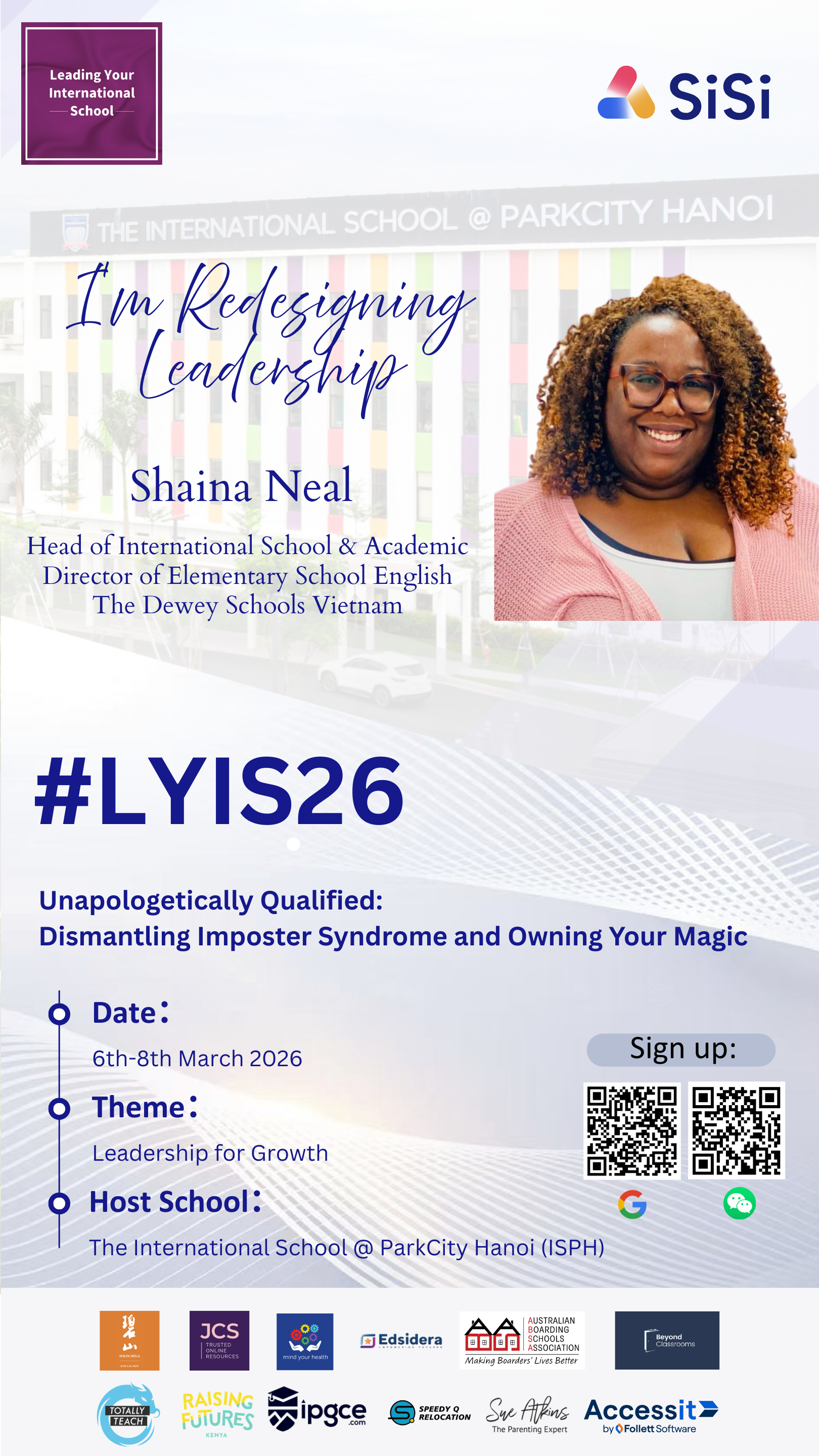
Join Shaina at #LYIS26, scan the QR code below:
LYIS is proud to partner with WildChina Education