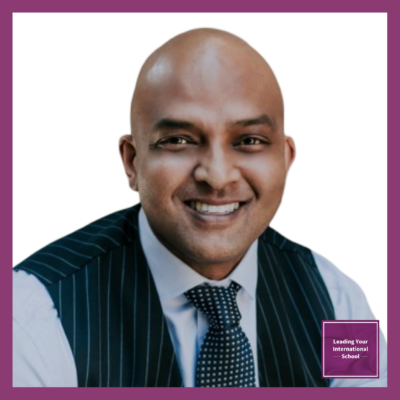
by Dr Ryan Persaud
In international schools, safeguarding is often discussed through the lens of compliance: policies, background checks, annual training modules, and accreditation requirements. While these are all essential, I have increasingly come to believe that safeguarding is fundamentally about leadership culture. Policies matter, but culture determines whether those policies live or remain dormant in a handbook.
One line I often share with aspiring leaders is this:
Leaders protect systems so that systems can protect children.
That mindset represents an important shift in how we think about safeguarding in schools. Teachers have a professional responsibility to report concerns and maintain safe classrooms. Leaders, however, are responsible for creating the institutional conditions that make safeguarding possible, visible, and sustainable. Safeguarding is not simply an operational task delegated to a counselor or designated safeguarding lead (DSL). It is a strategic leadership responsibility that shapes trust, culture, and ultimately the wellbeing of every learner in the community.
The LYIS Leadership Framework places “the highest practical standards of safeguarding, child protection and wellbeing” at the center of a learning-centered culture and ethos. That placement is significant. Safeguarding is not separate from learning; it is foundational to it. Students cannot flourish academically in environments where they do not feel physically and emotionally safe.
Beyond Compliance
One of the greatest risks in international education is reducing safeguarding to a once-a-year compliance exercise. Staff complete online modules, sign policies, and attend annual workshops, but safeguarding itself can remain disconnected from the daily life of the school.
In reality, safeguarding issues rarely arrive neatly packaged or conveniently timed. They emerge unexpectedly, often in moments of ambiguity and discomfort. They can involve influential families, respected staff members, or situations where cultural expectations conflict with international standards.
This is where leadership becomes critical.
Strong safeguarding cultures are not built only through procedures. They are built through repeated leadership actions that communicate:
● Student wellbeing comes first
● Concerns will be taken seriously
● Adults are expected to act
● Transparency matters more than institutional image
Students and staff quickly learn what a school truly values, not from posters or mission statements, but from how leaders respond under pressure.
Eveyy Adult is A Safeguarding Adult
One of the most important cultural shifts leaders can foster is the understanding that safeguarding belongs to everyone.
Too often, schools unintentionally create a mindset that safeguarding is “handled” by counselors, principals, or safeguarding leads. In healthy safeguarding cultures, every adult understands their role in protecting children.
This includes:
● Classroom teachers
● Office staff
● Coaches
● Bus drivers
● Educational assistants
● Nurses
● Senior leadership teams
Culture emerges through repetition. Leaders reinforce safeguarding culture by speaking about it regularly, embedding it into onboarding, integrating it into recruitment conversations, and revisiting procedures throughout the year. When adults see leaders take safeguarding seriously, even when situations are difficult or uncomfortable, they begin to trust the system itself.
In many ways, safeguarding culture mirrors school culture more broadly. Schools that foster belonging, trust, and strong relationships are often the same schools where safeguarding concerns surface earlier because students feel safer speaking up.
The Five Ps of Safeguarding
Over time, I have found it helpful to frame safeguarding leadership through what I call the “5 Ps”: Policy, Procedures, People, Professional Development, and Partnerships. Together, these elements form an interconnected safeguarding ecosystem.
Policy
Policies should be clear, accessible, and understandable, not written purely in legal language. In international schools especially, multilingual accessibility matters. Families and staff members cannot follow policies they cannot fully understand.
More importantly, policies should reflect the lived values of the school. If leadership behavior contradicts the policy, staff quickly learn which message truly matters.
Procedures
During a safeguarding concern, clarity matters more than complexity.
Staff should know:
● Who to report to
● How quickly reporting must happen
● How documentation is completed
● What next steps will follow
In moments of crisis, confusion can become dangerous. Effective leaders simplify systems so that action becomes easier, not harder.
People
Schools need trained safeguarding personnel, but they also need collaborative safeguarding teams. Safeguarding should never rest solely on one individual. Cross-functional teams, including counselors, nurses, HR personnel, and administrators, create stronger systems of support. In addition, schools should also have ready access to outside experts who can be called when complex situations arise.
Leadership succession planning also matters. International schools are transient by nature. If one person leaves and the safeguarding culture disappears with them, the system was never truly sustainable.
Professional Development
Safeguarding training must move beyond compliance toward confidence-building.
Annual whole-school training is important, but leaders also need deeper learning around:
● Trauma-informed practice,
● Difficult conversations,
● Online safety,
● Documentation,
● Cultural complexity,
● Crisis leadership.
Professional learning should also acknowledge emotional realities. Safeguarding work can be heavy, and leaders must create spaces where staff can process difficult situations and receive support themselves. Providing outlets for your staff who take this work on will go a long way to preserving their mental well being.
Partnerships
One of the most overlooked elements of safeguarding leadership is external partnership building.
International schools operate within varying legal and cultural contexts. Relationships with local authorities, embassies, counselors, medical professionals, and child protection agencies should be established before a crisis occurs, not during one.
Leaders do not need to become heroes. They need to become connectors. Start building your network now, and don’t be afraid to ask for help.
The Unique Challenge of International Schools
Safeguarding in international schools carries additional layers of complexity.
Cultural understandings of discipline, supervision, mental health, and abuse can vary significantly across countries and communities. Leaders must navigate these realities carefully while remaining grounded in internationally recognized child protection standards such as the UN Convention on the Rights of the Child and the guidance of organizations like CIS and the International Task Force on Child Protection.
Transient communities also create challenges. Students and families move frequently. Records can be incomplete. Relationships may feel temporary. Staff turnover can weaken institutional memory if systems are not intentionally maintained.
Recruitment is another area of vulnerability. International recruitment processes can contain gaps in references, background checks, and information sharing across countries. The LYIS Leadership Framework directly emphasizes embedding rigorous safeguarding practices throughout recruitment, including credential verification, internet screening, and robust reference checking.
Yet perhaps the greatest challenge leaders face is the tension between child protection and institutional reputation.
There are moments when schools may feel pressure to “handle things quietly.” Influential parents, respected staff members, financial implications, or fears around public image can all create hesitation.
This is where leadership courage matters most.
The real test of safeguarding culture is not how a school responds when situations are easy. It is how leadership responds when the stakes are high, visibility is uncomfortable, and reputational pressure intensifies.
What Students Remember
When students reflect on their school experience years later, they are unlikely to remember safeguarding policies. What they will remember is whether school felt safe.
They remember:
● Whether trusted adults listened,
● Whether concerns were acted upon,
● Whether dignity was protected,
● Whether relationships were grounded in care and respect.
In many ways, safeguarding is inseparable from belonging.
Students thrive in environments where they feel emotionally secure enough to take risks, ask questions, and be fully themselves. The strongest safeguarding cultures therefore tend to overlap with the strongest inclusion cultures. Both require trust, empathy, vigilance, and collective responsibility.
Final Reflections
Safeguarding is not a side conversation in school leadership. It is central to ethical leadership itself.
The LYIS Leadership Framework reminds us that leadership must be grounded in integrity, cultural intelligence, and sustainable systems that protect learning and wellbeing. Safeguarding sits at the intersection of all three.
As international school leaders, we are not simply responsible for managing schools efficiently. We are responsible for creating environments where children are protected, adults are accountable, and systems are strong enough to endure beyond any one individual.
Policies matter.
Training matters.
Procedures matter.
But ultimately, safeguarding becomes real when leadership consistently communicates one simple message:
Children’s safety and wellbeing will always come first.
Dr Ryan Persaud, Head of School – VERSO International School, Bangkok
LYIS is proud to partner with Beyond Classrooms