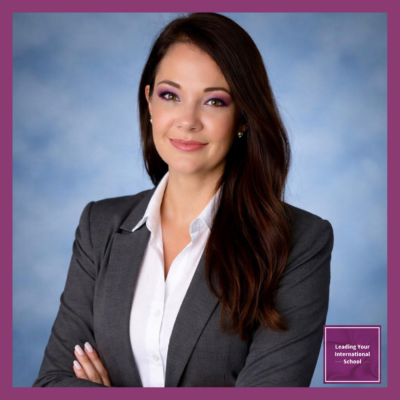
by Dr Mari Simpson
Building the Conditions for Students and Adults to Grow
When we talk about learning-centered schools, the conversation often moves quickly to students. We speak about agency, inquiry, collaboration, voice, choice, and deeper learning. These are all important, but in my experience, a truly learning-centered environment does not begin with students alone. It begins with leadership. It begins with the adults. It begins with the systems, culture, trust, and professional capacity that allow teachers to design learning differently.
I learned this by leading a whole-school transformation from a more traditional model of teaching and learning toward an inquiry-driven, project-based, and student-centered approach. This was not a quick shift, and it was not simply about asking teachers to “let students lead.” In fact, one of the biggest misconceptions about learning-centered education is that teachers step back and students simply take over. That is not learning-centered leadership. That is unstructured freedom.
Learning-Centered Does Not Mean Unstructured
A strong learning-centered environment is built through structured exploration. Students may have voice and choice. They may follow different pathways, investigate different solutions, and produce different outcomes. But behind that freedom is intentional design. Teachers still identify the standards, plan the learning sequence, create the driving question, anticipate possible directions, prepare resources, build opportunities for critique and revision, and guide students through the process.
In these environments, teachers do not work less. They often do more front-loading because they are not only delivering content; they are designing the conditions for students to think, inquire, collaborate, and create.
This is where leadership becomes essential. A school cannot move toward deeper learning if the adults are unclear about what they are building. The vision has to move beyond slogans and become visible in planning, professional development, classroom practice, assessment, learning spaces, parent communication, and leadership decisions. Teachers need to understand that learning-centered education is not the removal of structure. It is the redesign of structure so that students engage more deeply and take greater ownership of their learning.
The Project Must Drive the Learning
During our transformation, we wanted students not only to learn about science, sustainability, entrepreneurship, communication, or community issues, but to experience what it means to think and act like scientists, designers, researchers, authors, entrepreneurs, and problem-solvers. That shift required teachers to see the project not as an extra activity at the end of a unit, but as the vehicle through which learning happened.
The project had to drive the learning. It had to create a genuine need to know. It had to require research, collaboration, feedback, multiple drafts, and a meaningful final product shared with an audience beyond the teacher.
This is one of the most important mindset shifts in learning-centered leadership. When the project runs the learning, students are not simply completing tasks. They are building understanding through purpose. They are learning content because they need it to solve, create, explain, improve, or contribute.
Professional Development Must Build Capacity
For that to happen, professional development cannot be a one-day workshop. Teachers need a rigorous, ongoing professional development cycle. They need to learn, unlearn, and relearn.
Many teachers are used to teaching in subject silos, following fixed sequences, and measuring learning through familiar tasks. A learning-centered model asks teachers to think differently. It asks them to plan across subjects, make learning visible, design authentic experiences, facilitate student questions, and assess skills such as collaboration, communication, critical thinking, and problem-solving.
This kind of professional growth takes time. Teachers need training, but they also need planning structures, coaching, peer collaboration, observation, feedback, and reflection. They need to break projects into milestones. They need to ask: What are the desired outcomes? What content and skills do students need? What is the driving question? What final product will make the learning meaningful? What opportunities will students have for critique, revision, and self-reflection? Which skills will we intentionally assess, and how will we avoid assessing everything at once?
This is why I believe professional development should not only transfer knowledge. It should build capacity. Capacity is what allows teachers to carry the work with confidence, consistency, and creativity after the training session is over.
Teachers Need Structure and Flex Space
As leaders, we have to create the conditions for that kind of professional learning. We cannot ask teachers to take risks in classrooms while leading in ways that make them afraid to fail. If we want creativity and inquiry from students, we have to protect creativity and inquiry for adults.
Teachers need enough structure to know the expectations, but enough flexibility to test, adapt, and grow. I often think of this as giving teachers “flex space.” It is not the absence of accountability. It is the professional room to try something new, reflect honestly, adjust practice, and build confidence over time.
That culture of safety matters. When teachers feel judged too quickly, they return to what feels safe. When they feel supported, they are more willing to experiment. Learning-centered classrooms require teachers who are creative, reflective, and open to new ways of thinking about learning. They also require leaders who are present. Leaders need to listen, ask guiding questions, brainstorm with teams, check in regularly, and recognize that different teachers and teams will need different levels of support.
Feedback Builds the Culture
Feedback became central to our transformation. Not only formal feedback from leaders, but ongoing feedback between teachers, students, peers, and families. We used critique protocols with students because feedback had to be kind, helpful, and specific. Students learned to be “soft on the person, hard on the content.” They learned to ask better questions, explain their thinking, revise their work, and improve through multiple drafts.
The same principle applied to adults. If we wanted students to see feedback as part of learning, teachers also needed to experience feedback as developmental rather than punitive.
In a learning-centered school, feedback is part of the culture. It helps people see growth as normal, revision as expected, and improvement as shared work.
The Environment Must Make Learning Visible
The physical and emotional environment also had to change. A learning-centered school cannot be limited to desks facing the front of the classroom. We began using hallways, communal areas, flexible seating, research corners, calming corners, student support spaces, and classroom walls as part of the learning process.
Learning became visible through timelines, project walls, student work, photos, evidence, drafts, and reflections. These were not decorations. They were tools for ownership. A visitor could walk into a classroom, look at the Learning Journey Wall, and understand where students were in the project, what they had already done, and what they were working toward next.
This mattered because learning-centered leadership is not only about changing instruction. It is about changing the conditions around instruction. The environment, the routines, the language, the evidence, and the expectations all need to tell the same story.
Student Voice Builds Parent Trust
Student-Led Conferences and Showcase Days also became powerful parts of the culture. Students explained their projects, timelines, subject connections, research, challenges, and outcomes to their families. Parents began to see learning differently. They could hear their children speak about process, not only product. They saw confidence, communication, leadership, and maturity developing in ways that traditional reporting alone may not capture.
This was important because parent trust grows when families understand the purpose behind change. When parents see that students are not just “doing activities,” but developing knowledge, skills, confidence, and voice, they begin to understand the value of a learning-centered model.
Learning-Centered Leadership Is a School Improvement Strategy
Over time, I saw how connected all of this was. A clear learning vision strengthened teacher practice. Strong professional development built teacher confidence. A safer adult culture increased willingness to innovate. Better learning experiences improved student engagement. Student ownership strengthened parent trust. Parent trust contributed to enrollment stability and school reputation.
This is the part of learning-centered leadership that is often underestimated. It is not only an instructional priority. It is a school improvement strategy. When leaders build adult capacity, they improve student experience. When student experience improves, parent confidence grows. When parent confidence grows, the school’s stability, reputation, and brand value grow with it.
That is why sustainable school improvement cannot be built on initiatives alone. It has to be built on people, systems, and culture.
A Final Reflection for School Leaders
For other leaders, my summary would be this: start with a clear vision for learning, then build the adult capacity required to make that vision real. Invest in rigorous, ongoing professional development cycles, not isolated workshops. Give teachers structure, coaching, collaboration time, feedback, and enough flex space to try, fall, reflect, and improve. Make learning visible through environments, timelines, student voice, conferences, and showcases. Help parents understand that learning-centered education is not free learning; it is structured exploration with purpose. When leaders build the adults, they strengthen the students. When students grow in confidence, agency, and skill, families begin to trust the school more deeply. And when trust grows, the school’s stability, enrollment, and brand value grow with it.
Dr Mari Simpson, Assistant Head of School, Emirates National Schools, UAE
LYIS is proud to partner with Beyond Classrooms