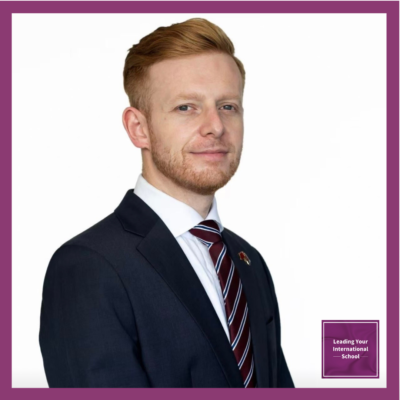
by Joshua Darryl Sussex
There is a moment that most international school leaders recognise. You arrive in a new context, a new country, a new school, a new community, carrying approaches that worked well elsewhere. You have led staff meetings with those approaches. You have resolved the conflict with them. You have built cultures with them. And then, quietly at first and then unmistakably, they stop working.
The meeting does not land as expected. The feedback is received differently. The relationship you thought you were building shifts in a way you cannot quite name. The playbook, you realise, was written somewhere else.
A failure of leadership? It is a structural reality of international school leadership that our frameworks have been slow to address.
Culture is the variable that determines whether leadership works at all.
𝐓𝐡𝐞 𝐏𝐫𝐨𝐛𝐥𝐞𝐦 𝐰𝐢𝐭𝐡 𝐚 𝐔𝐧𝐢𝐯𝐞𝐫𝐬𝐚𝐥 𝐏𝐥𝐚𝐲𝐛𝐨𝐨𝐤
International school leadership literature has developed considerably in recent decades. We have frameworks for instructional leadership, distributed leadership, transformational leadership, and servant leadership, to name a few. What we have far fewer of are frameworks designed explicitly for leaders who operate across cultural boundaries, leaders who must simultaneously hold the expectations of a British curriculum, the regulatory requirements of a host nation, the professional norms of a multinational staff body, and the parental expectations of a multilingual community.
Most leadership frameworks were designed for environments where cultural assumptions are largely shared and go unquestioned. The leader and the led inhabit the same cultural grammar. Symbols carry an agreed meaning. Trust is built through familiar mechanisms.
In international schools, none of that can be assumed. The cultural grammar is plural, contested, and shifting. This is the central leadership condition.
My doctoral research at the University of Bath, exploring leadership practice in British international schools across Asia, led me to a consistent finding: the leaders who built genuine institutional coherence were not those with the most sophisticated management systems. They were those who had developed, often through hard experience, a particular kind of cultural awareness. They had learned to lead across cultures deliberately, rather than despite them.
𝐈𝐧𝐭𝐫𝐨𝐝𝐮𝐜𝐢𝐧𝐠 𝐂𝐮𝐥𝐭𝐮𝐫𝐚𝐥𝐥𝐲 𝐌𝐞𝐝𝐢𝐚𝐭𝐞𝐝 𝐋𝐞𝐚𝐝𝐞𝐫𝐬𝐡𝐢𝐩(𝐂𝐌𝐋)
From that research, I developed a conceptual and practical framework I call Culturally Mediated Leadership(CML). It is a practical account of how effective international school leaders navigate cultural complexity in their day-to-day leadership practice.
CML is built around five interconnected dimensions. Each dimension addresses a specific aspect of the challenge of leading across culturally complex environments. Together, they offer a language and a diagnostic for understanding why leadership coherence sometimes breaks down, and what to do about it.
01 Cultural Reflexivity
The capacity to examine your own cultural assumptions before acting. Leaders high in cultural reflexivity do not simply bring their leadership style into a new context; they interrogate it first. They ask: What do I assume about how authority works here? About how feedback should be given? About what trust look like? This self-interrogation is precision.
02 Symbolic Sensitivity
The ability to read and respond to the symbolic dimensions of leadership, the meanings attached to gestures, spaces, ceremonies, and language that are not always visible to an outsider but are deeply felt by those within a community. What signals respect? What signals disregard? Leaders who develop symbolic sensitivity move through their schools with a kind of cultural literacy that builds trust in ways formal policy never can.
03 Stakeholder Interpretation
The practice of reading what stakeholders actually mean as distinct from what they say, across cultural contexts. In many international school communities, direct disagreement is avoided, concerns are communicated indirectly, and silence carries meaning. Leaders who develop this dimension learn to listen for what is unsaid as attentively as for what is expressed.
04 Adaptive Bridging
The deliberate construction of connections between different cultural groups, staff, students, parents, governance, and ownership in ways that remain different and build shared purpose across them. This is not assimilation; it is architecture. The leader becomes a builder of bridges that allow different cultural communities to work toward common goals without being required to abandon their own.
05 Strategic Mediation
The ability to use cultural understanding as a strategic resource rather than simply a constraint to be managed. Leaders operating at this dimension do not just adapt to cultural complexity; they use it. They draw on the richness of a culturally diverse community to build stronger institutions, better decisions, and more innovative practice.
𝐖𝐡𝐚𝐭 𝐓𝐡𝐢𝐬 𝐋𝐨𝐨𝐤𝐬 𝐋𝐢𝐤𝐞 𝐢𝐧 𝐏𝐫𝐚𝐜𝐭𝐢𝐜𝐞
CML is a lens. The five dimensions are interdependent; strength in one does not compensate for weakness in another and they are dynamic, shifting as context shifts.
A leader might have developed strong Cultural Reflexivity through years of international experience, and yet struggle with Symbolic Sensitivity when moving into a new cultural environment.
A leader confident in Stakeholder Interpretation within one community may find their skills do not transfer directly when the community changes. The framework is designed to prompt honest self-assessment rather than reassuring self-certification.
In my own practice, the dimension I return to most consistently is Adaptive Bridging. In a school community that spans several nationalities, two curriculum systems, local and expatriate staff cultures, and families with very different expectations of what a British international school should be, the work of building shared purpose without demanding cultural uniformity is never finished. It requires constant attention to where the bridges are holding and where they are under strain.
Leadership coherence in international schools is not about having the right answers. It is about asking the right questions of your context, your community, and yourself.
𝐀 𝐐𝐮𝐞𝐬𝐭𝐢𝐨𝐧 𝐟𝐨𝐫 𝐘𝐨𝐮
I want to leave you with something practical. Across the nine Impact dimensions of the LYIS Leadership Framework, cultural intelligence runs as a thread, most explicitly in Impact 2 (Learning-Centred Culture) and Impact 1 (Purpose and Values), but is present in all of them. The question the framework rightly asks is not whether you are aware of culture, but whether your leadership is shaped by that awareness.
So here is the question I invite you to sit with:
Think of a leadership decision you have made in the past year that did not land as you intended. Not a decision that was wrong in principle, one that was right in principle but produced friction, resistance, or unexpected consequences.
Now ask: how much of that friction was cultural? And which of the five CML dimensions, reflexivity, sensitivity, interpretation, bridging, or mediation, might have helped you navigate it differently?
I would genuinely welcome your reflections. International school leadership is richer when we think out loud together, across contexts, across cultures, and across the friction that so often turns out to be the most important teacher.
Joshua Darryl Sussex, Deputy Head of Secondary and Head of Teaching and Learning, Sri KDU International School, Penang
LYIS is proud to partner with Beyond Classrooms