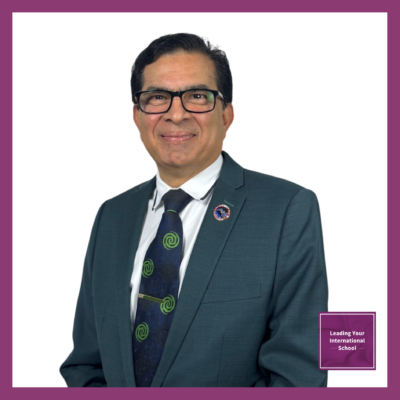
by Kris Bhatt
Today’s students arrive at our school gates carrying more uncertainty than ever before. Unlike previous generations, they cannot clearly predict what the world will look like in one, two, or five years’ time. Rapid technological change is transforming industries, careers, and societies at a pace that schools often struggle to match. Knowledge itself is no longer scarce; almost any fact can be accessed instantly. As a result, education must move beyond teaching the “what” and focus instead on the “what if”.
This shift requires us to rethink how we teach, how we assess learning, and how we prepare students to respond to unfamiliar challenges. It also brings into sharp focus the need to balance three critical domains: learning, achievement and wellbeing.
𝐋𝐞𝐚𝐫𝐧𝐢𝐧𝐠 𝐁𝐞𝐲𝐨𝐧𝐝 𝐭𝐡𝐞 𝐂𝐥𝐚𝐬𝐬𝐫𝐨𝐨𝐦
Learning is a non-linear, dynamic process. To assume that learning occurs only within the four walls of a classroom and solely under the guidance of a teacher is a misconception. What happens inside the classroom is not an isolated act; it builds upon the knowledge, skills, and experiences that a child has already acquired before stepping into that space. The curriculum and the teacher provide structure, direction, and scaffolding, but the true essence of learning lies in connecting new knowledge to prior understanding.
Unfortunately, many teachers tend to focus narrowly on the curriculum, teaching concepts in isolation without linking them to the child’s lived experiences. This approach risks disengagement and superficial learning. What is needed is a deliberate system that helps teachers identify the knowledge and skills a child already possesses and then adopt methods that allow the child to discover new knowledge, refine existing abilities, and acquire fresh skills that prepare them for success in the wider world.
At NPS International School, we have institutionalized this philosophy through carefully designed learning pathways. When students enter Grade 6, we conduct a comprehensive Learner Profile Survey to map their strengths, gaps, and interests. This survey, completed jointly by students and parents, generates rich data that is analysed and shared with classroom teachers. To deepen this process, we organize a Meet the Parent evening where homeroom teachers discuss the findings with both parents and students, collaboratively drafting a personalized learning plan. Every teacher who interacts with the student receives a copy of this profile, ensuring that instruction is tailored to individual needs.
This exercise has proven transformative. It strengthens the loop of learning, achievement, and wellbeing, ensuring that no child is left behind. Our goal is academic success, happiness, engagement, and confidence in the classroom.
Balancing learning, achievement, and wellbeing is central to our philosophy. At NPSI, learning pathways are progressive, structured, and incremental. Students are assessed at every stage to confirm understanding, identify gaps, and address them before moving forward. If a child struggles or lags, remedial lessons are offered after school hours to provide additional support.
Equally important is the role of student self-reflection. At the end of every unit and assessment, students reflect on their learning journey, helping us gather valuable insights into their progress and challenges. This reflective practice empowers students to take ownership of their learning while giving teachers actionable data.
Another cornerstone of our approach is the revision week after Summative Assessment. During this period, concepts are revisited, reinforced, and clarified, ensuring that students transition to the next grade with minimal gaps in understanding. This systematic preparation allows them to progress confidently, feeling both contented and capable.
In essence, our teaching philosophy recognizes that learning is not linear, nor confined to textbooks and classrooms. It is a continuous journey shaped by prior knowledge, guided by structured pathways, and enriched by reflection and support. At our school, we are committed to nurturing learners who achieve academic excellence while thriving emotionally and socially. By embedding systems that honour each child’s individuality, we ensure that every student moves forward with purpose, resilience, and joy in learning.
𝐓𝐡𝐞 𝐏𝐫𝐨𝐜𝐞𝐬𝐬 𝐨𝐟 𝐋𝐞𝐚𝐫𝐧𝐢𝐧𝐠 𝐢𝐧 𝐓𝐡𝐞 𝐖𝐨𝐫𝐥𝐝 𝐨𝐟 𝐀𝐈 𝐚𝐧𝐝 𝐓𝐞𝐜𝐡𝐧𝐨𝐥𝐨𝐠𝐲
True learning occurs when students can apply their knowledge to new situations. The ability to answer the “what if” requires divergent thinking, creativity, and problem-solving. Since every student brings different experiences and perspectives, there is rarely a single correct answer. This means our role as educators is never simply to deliver information; equally important, to develop students’ capacity to question, analyse, evaluate and form their own views. In short, we must teach students how to think, not just what to think.
The rise of artificial intelligence has made this challenge even more urgent. Increasingly, students turn to AI tools for answers to questions both simple and complex. While these technologies offer tremendous opportunities, they can also encourage what I call “outsourcing thinking” — the habit of relying on technology rather than engaging in independent thought. If students can simply copy and paste answers, traditional assignments risk losing their value.
This reality demands a reconsideration of assessment practices. Increasingly, educators are exploring authentic assessments that require students to explain, defend, and apply their thinking in real time. Such approaches place the emphasis back on understanding, reasoning and originality rather than information retrieval.
Rather than resisting AI, schools must teach students how to use it responsibly and effectively. At our school, we provide clear guidance for both teachers and students. Teachers may use AI to support lesson planning, generate practice questions and identify engaging learning activities. Students may use AI to brainstorm ideas, improve the quality of their writing and find additional practice opportunities. We encourage them to see AI as an assistant, a planner and a challenger—a tool that supports thinking, not replaces it. Developing AI literacy is now an essential responsibility for schools, ensuring that technology enhances learning while preserving authenticity and academic integrity.
𝐒𝐞𝐥𝐟-𝐑𝐞𝐠𝐮𝐥𝐚𝐭𝐢𝐨𝐧 – 𝐒𝐨𝐜𝐢𝐚𝐥 𝐌𝐞𝐝𝐢𝐚 – 𝐒𝐮𝐩𝐩𝐨𝐫𝐭 𝐒𝐲𝐬𝐭𝐞𝐦
Alongside these academic challenges, students are also navigating increasing social and emotional pressures. They face the demands of social media, complex friendships, rising expectations and, often, significant learning gaps. Many struggle with resilience, self-management, and confidence. Their psychological and social wellbeing deserves as much attention as their academic progress.
Schools therefore have a crucial role to play in supporting student wellbeing. Regular wellbeing check-ins, strong partnerships with parents, proactive communication and meaningful wellness programmes can help identify concerns before they become larger issues. Equally important is creating time and space for conversations about happiness, purpose and belonging. When students show signs of distress, we must respond with patience, dialogue and support, drawing on mentors, peers and trusted adults to help them navigate challenges.
𝐅𝐮𝐭𝐮𝐫𝐞 𝐈𝐬 𝐍𝐨𝐭 𝐁𝐥𝐞𝐚𝐤 𝐛𝐮𝐭 𝐁𝐫𝐢𝐠𝐡𝐭: 𝐀 𝐇𝐨𝐥𝐢𝐬𝐭𝐢𝐜 𝐕𝐢𝐬𝐢𝐨𝐧 𝐟𝐨𝐫 𝐄𝐝𝐮𝐜𝐚𝐭𝐢𝐨𝐧
Education is the integration of learning, achievement and wellbeing. Learning without achievement is abstract, achievement without wellbeing is unsustainable, and wellbeing without learning lacks empowerment. True education weaves these strands together to support every child.
Critical thinking prepares students for exams and for life, enabling them to analyse, innovate, and make ethical decisions. Authentic achievement builds confidence and purpose, while wellbeing nurtures resilience, joy, and belonging. Together, they create balanced, meaningful growth.
At NPS International School, we embed this philosophy into practice. From learner profiles that identify strengths and gaps to revision weeks that ensure smooth transitions, our systems connect curriculum to lived experiences and engage parents as partners.
The future of education is bright when schools nurture curiosity, competence, joy, and resilience. Our enduring purpose is to prepare students for life.
What actions does your school take to balance Learning, Achievement and Wellbeing? I look forward to hearing from you.
Dr. Kris Bhatt, Senior Principal, NPS International School
Kris will be leading a workshop at #LYIS27 on:
‘𝐃𝐢𝐯𝐞𝐫𝐬𝐢𝐭𝐲 𝐚𝐧𝐝 𝐈𝐧𝐜𝐥𝐮𝐬𝐢𝐨𝐧: 𝐏𝐫𝐨𝐜𝐞𝐬𝐬 𝐚𝐧𝐝 𝐏𝐮𝐫𝐩𝐨𝐬𝐞’
Join Kris at #LYIS27: https://forms.gle/iTs7Ms9yqLthLDQu6
𝐋𝐘𝐈𝐒 is proud to partner with 𝐁𝐞𝐲𝐨𝐧𝐝 𝐂𝐥𝐚𝐬𝐬𝐫𝐨𝐨𝐦𝐬